
Free video course · Module 4: Comparing Your Options
You may have seen news or social media about MUSE cells (M-U-S-E). In this lesson, Dr. Bill Johnson explains what that term refers to and why he wants patients to be careful when they evaluate it. In the lab, MUSE cells are described as the cells that remain after a plate of stem cells is stressed. That is a laboratory description, not a promise that they work better in people. One concern with the MUSE-cell products available in the United States is that they typically come from a donor rather than from you. Another is that they are hard to produce, and the amount you may be offered can be small. This is a reason to ask careful questions, not a claim that MUSE cells cannot help anyone.
Unlocked. Press play to watch. Every lesson is now open on this device.
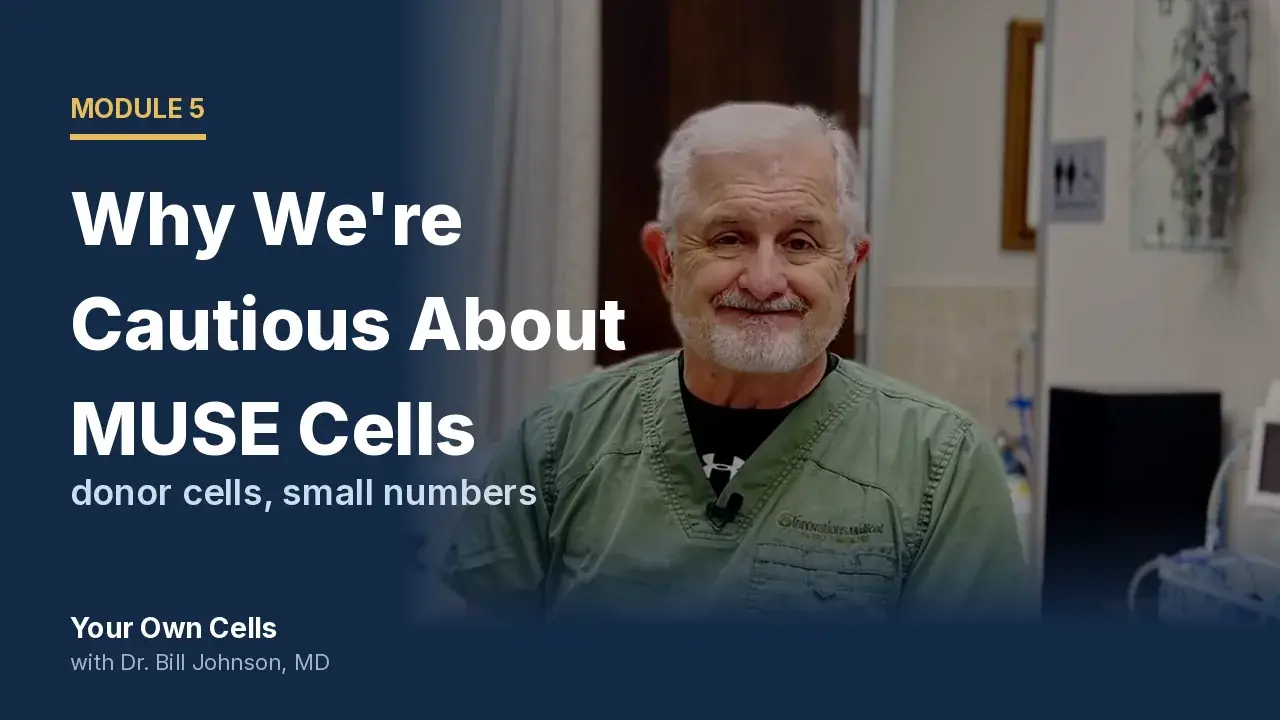 Lesson 23Why We're Cautious About MUSE Cells
The welcome and the first two lessons are open to everyone. Enter your name, email and phone once to unlock every lesson. No password and no account.
Already signed up? Open the course link we sent by email or text, or call or text (972) 893-9849.
Talk with our team
You don’t need to finish the course before you reach out. Call or text us, Monday to Friday, 8:30 AM to 5 PM.
Stem cell therapy is not FDA-approved for these uses. Individual results vary.