Traumatic brain injuries (TBIs) can be deadly and devastating, and life for those who sustain these injuries may never be the same. National Traumatic Brain Injury Awareness Month is observed each September to increase awareness about preventing and treating TBIs. The Innovations Stem Cell Center treats patients living with TBIs and other neurological injuries using fat stem cell therapy.
Traumatic brain injuries and post-concussion syndrome are core conditions treated within our dedicated Neurological Recovery & Brain Health Center.
Understanding Traumatic Brain Injury (TBI) & Post-Concussion Syndrome
A TBI is a sudden injury that causes brain dysfunction. Typically, TBIs are caused by a sudden, outside force.
One of the most common types of TBI is a concussion. Although considered mild in many cases, concussions can be serious. Despite the current spotlight on concussions and sports, these injuries are not limited to only professional athletes. Car accidents can cause them, as well as falls and blows to the head.
Facts About Traumatic Brain Injuries
Approximately 2.8 million people suffer a TBI annually. Of this number, 50,000 individuals die, and 282,000 are hospitalized for their injuries. The rest (2.5 million) receive treatment and are then released. Researchers believe that other individuals sustain TBIs and do not realize it. As a result, they do not seek medical treatment.
• Almost half of the visits to the emergency room between 2007 and 2013 were because of brain injuries.
• More than 26,000 non-fatal bicycling-related traumatic brain injuries occur each year.
• Approximately 13.5 million Americans are living with a TBI-related disability.
What are the Symptoms of Traumatic Brain Injuries?
The symptoms of TBIs vary between individuals. Not all symptoms of a brain injury are evident immediately, which makes early diagnosis critical for getting patients the help they need following a TBI. If you suspect you or your loved one has sustained a blow to the head, it is good to get them checked just in case.
The most common symptoms of a traumatic brain injury include:
- Head pain
- Confusion
- Memory loss
- Dizziness or imbalance
- Fainting and extreme fatigue
- Difficulty concentrating
- Difficulty speaking and comprehending spoken words
- Personality changes, irritability and mood swings
- Dilated pupils or uneven pupils
- Light and sound sensitivity
- Impaired speech
Severe TBI injuries can also lead to seizures, tremors, paralysis, and disability.
How ~100 Million Fat-Derived MSCs Support Neuroplasticity & Repair
Stem cell therapy is beneficial in many cases of traumatic brain injury. Although the consensus of opinion is that early treatment a few days or even hours after the injury, improvement has been seen even years after the original trauma. Cognitive function, perception, and mood or irritability have all seen improvement. In some cases, improvement in motor function when impaired has improved. The numbers remain small, but the early results are very encouraging.
Enhanced Penetration: The Mannitol Blood-Brain Barrier Protocol
A major hurdle in treating traumatic brain injuries is the blood-brain barrier (BBB)—the body’s selective protective filter that limits which substances pass from the bloodstream into central brain tissue. While this barrier protects against infections, it can also restrict therapeutic growth factors and systemic stem cells from reaching deep, injured brain tissue following trauma.
To overcome this physiological challenge, Innovations Stem Cell Center incorporates a specialized Mannitol administration protocol prior to intravenous cellular deployment:
1. Temporary Osmotic Gateway: Mannitol is a safe, medically established sugar alcohol administered intravenously just prior to stem cell deployment. It temporarily and safely relaxes the tight junctions of the blood-brain barrier by gently drawing fluid away from vascular endothelial cells.
2. Direct Access to Injured Pathways: By opening this brief physiological window, ~100 million autologous Mesenchymal Stem Cells (MSCs)—along with critical signaling growth factors like BDNF and VEGF—can circulate directly into post-traumatic brain tissue and areas of chronic neurovascular stress.
3. Non-Invasive Safety Profile: Pre-treatment with Mannitol combined with standard systemic IV infusion delivers high concentrations of autologous cells directly to central neural pathways without requiring invasive hospital procedures.
Dedicated Care & Support for Military Veterans & First Responders
Military veterans and first responders face disproportionately high rates of traumatic brain injury due to blast exposure, training accidents, and high-impact operational environments. Service members frequently endure prolonged post-concussion syndrome, persistent fog, chronic fatigue, and cognitive challenges that do not respond fully to conventional therapies.
At Innovations Stem Cell Center, we are deeply honored to serve active-duty military, veterans, and first responders seeking advanced regenerative solutions for TBI:
1. Addressing Blast Neurotrauma: Explosive shockwaves cause subtle, microscopic shearing of nerve fibers (diffuse axonal injury) and persistent vascular inflammation. Our high-yield autologous fat-derived stem cell protocols are specifically designed to reduce chronic neuroinflammation and support microvascular repair.
2. Turnkey Veteran Care: We streamline every step of the medical journey, coordinating pre-procedure lab work locally and providing full logistical guidance so service members and their families can focus entirely on recovery.
Learn more about our dedicated care options for military personnel in our full article on stem cell therapy for military veterans with TBI.
Addressing Co-Occurring PTSD & Neuroinflammation
Traumatic brain injuries frequently co-occur with Post-Traumatic Stress Disorder (PTSD), particularly among combat veterans and accident survivors. Recent neuroimaging research shows that severe emotional trauma and physical brain trauma share common pathological pathways: chronic neuroinflammation, microglial hyperactivity, and disrupted neurovascular blood flow.
By utilizing high-yield autologous stem cell protocols to calm central nervous system inflammation and promote neurotrophic signaling, our supportive approach targets the biological stress response underlying post-traumatic neurovascular damage.
To explore how cellular immunomodulation targets co-occurring emotional and physical neurotrauma, read our article on stem cell therapy for PTSD and neuroinflammation.
Sports Neurotrauma & Repetitive Head Impacts in Athletes
High-contact sports like football subject the brain to repeated sub-concussive and concussive impacts. Over time, these repetitive rotational acceleration forces can trigger chronic microvascular damage, diffuse axonal injury, and persistent neuroinflammation long after an athlete leaves the field.
Our adipose-derived Stromal Vascular Fraction (SVF) protocols deliver high concentrations of autologous stem cells and angiogenic growth factors (such as VEGF) to support capillary regrowth, improve microvascular perfusion, and assist the body’s natural cellular repair mechanisms in post-athletic neurotrauma.
For athletes dealing with long-term post-concussion symptoms from contact sports, discover how stem cells relate to football concussions and neurotrauma recovery.
Early Results of Use of Stem Cells for Traumatic Brain Injury
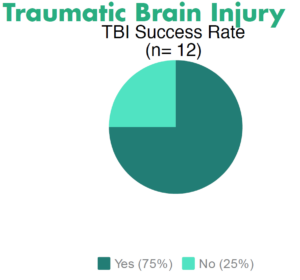
More work needs to be done, but these are encouraging results and can give hope to patients and loved ones of those suffering from traumatic brain injuries. See our blogs Understanding Adipose-Derived Stem Cells and What are Stem Cells?
Cost of Stem Cell Treatment
Our adipose-derived stem cells yield 100 million cells per treatment – compared to just 100,000 from bone marrow.
$16,500 for initial treatment
Your investment includes:
✅ Complete medical evaluation
✅ Stem cell harvest & processing
✅ IV infusion with mannitol (enhances brain penetration)
✅ Follow-up care included
Second treatment (if needed): $10,000
Financing is available. Contact us directly and we’ll help you apply.
To learn more about Innovations Stem Cell Center’s treatment options for TBIs, call us today.