
Mitochondrial Aging: 7 Ways Energy Decline Accelerates Aging
Jump to Section:
What Is Mitochondrial Aging | Healthspan vs Lifespan | 7 Aging Mechanisms | Stem Cells & Mitochondria | Real-World Impact | What This Does Not Claim
Mitochondrial aging is one of the primary biological drivers of fatigue, metabolic decline, immune dysfunction, and loss of resilience with age. Research shows that declining mitochondrial energy production, increased oxidative stress, and impaired cellular signaling contribute directly to reduced healthspan. Emerging regenerative strategies, including mesenchymal stem cell (MSC) paracrine signaling, may help support mitochondrial function and cellular energy balance as part of a science-based anti-aging approach.
Introduction: Aging Begins in the Cell’s Power Plants
Mitochondria are often described as the power plants of the cell. They generate the energy required for nearly every biological process, from muscle contraction and brain function to immune defense and tissue repair. As we age, mitochondrial efficiency declines, and this loss of cellular energy plays a major role in how quickly the body deteriorates.
Research increasingly shows that mitochondrial aging is not just a consequence of getting older—it is one of the key drivers of biological aging itself. At Innovations Stem Cell Center, our anti-aging approach focuses on supporting mitochondrial health as part of a broader healthspan strategy.
What Is Mitochondrial Aging?
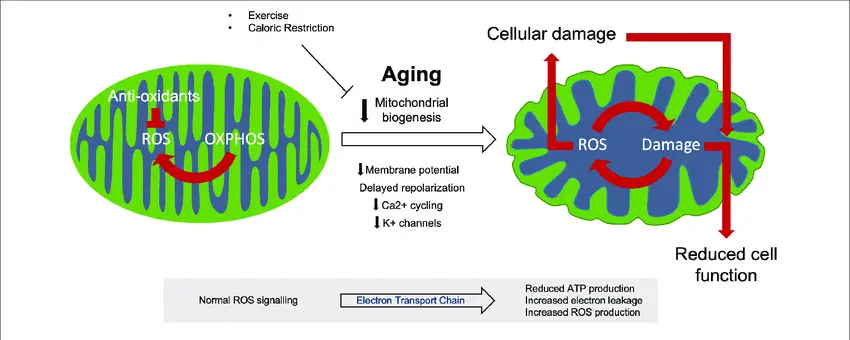
Mitochondrial aging refers to the gradual decline in mitochondrial number, efficiency, and quality control that occurs with age. This leads to reduced energy production and increased generation of damaging oxidative byproducts.
As mitochondrial function declines, cells struggle to meet energy demands, making tissues more vulnerable to injury, inflammation, and degeneration.
Why Mitochondria Matter for Healthspan vs Lifespan
Living longer does not necessarily mean living better. Mitochondrial health is one of the most important biological factors separating healthspan from lifespan.
When mitochondria function well:
Muscles maintain strength and endurance
The brain sustains focus and memory
The immune system responds efficiently
Metabolism remains balanced
When mitochondrial function declines, fatigue, weakness, metabolic disease, and cognitive decline often follow.
7 Science-Backed Ways Mitochondrial Aging Accelerates Decline
1. Reduced Cellular Energy Production
Aging mitochondria produce less adenosine triphosphate (ATP), the primary molecule that fuels nearly all cellular activity. When ATP production declines, cells struggle to perform basic functions such as repair, detoxification, and regeneration. This energy deficit commonly presents as persistent fatigue, slower recovery from physical activity, and reduced endurance. Over time, insufficient cellular energy limits tissue repair and accelerates functional decline across multiple organ systems.
2. Increased Oxidative Stress
As mitochondrial efficiency declines, a greater proportion of energy production generates reactive oxygen species (ROS). These unstable molecules damage DNA, proteins, and cell membranes when not adequately neutralized. Over time, oxidative stress accelerates cellular aging and amplifies chronic inflammation throughout the body. This creates a self-perpetuating cycle in which damaged mitochondria produce even more oxidative stress.
3. Impaired Muscle Function
Skeletal muscle has one of the highest energy demands of any tissue, making it especially vulnerable to mitochondrial aging. Reduced mitochondrial output limits muscle contraction, repair, and growth, contributing to sarcopenia and weakness. As muscle mass and strength decline, mobility and balance are affected, increasing the risk of falls and loss of independence. Maintaining mitochondrial health is therefore critical for preserving physical function with age.
4. Metabolic Dysfunction
Mitochondria play a central role in regulating how the body processes glucose and fats. When mitochondrial function declines, cells become less efficient at using energy substrates, contributing to insulin resistance and abnormal lipid metabolism. This dysfunction increases the risk of obesity, type 2 diabetes, and cardiovascular disease. Metabolic instability is a major factor separating healthspan from lifespan.
5. Cognitive Decline
Neurons require a constant and substantial supply of mitochondrial energy to maintain signaling, memory formation, and neural plasticity. As mitochondrial efficiency declines, the brain becomes more vulnerable to oxidative stress and inflammatory damage. These changes are associated with slower information processing, memory impairment, and increased risk of neurodegenerative conditions. Supporting mitochondrial function is therefore essential for preserving cognitive clarity with age.
6. Impaired Immune Function
Immune cells rely on rapid energy availability to identify and respond to pathogens. Mitochondrial dysfunction limits this energy supply, weakening immune defenses while paradoxically promoting chronic low-grade inflammation. This imbalance contributes to increased infection risk, slower recovery, and the development of inflammaging. Healthy mitochondrial activity is a key requirement for balanced and effective immune responses.
7. Reduced Stress Resilience
Healthy mitochondria allow cells to adapt to physical, metabolic, and oxidative stress. As mitochondrial function declines, cells lose the ability to respond efficiently to these stressors. This reduced resilience makes tissues more susceptible to injury, illness, and prolonged recovery. Over time, diminished stress tolerance accelerates overall biological aging and functional decline.
How Stem Cell Signaling Supports Mitochondrial Health
Mesenchymal stem cells (MSCs) support mitochondrial health primarily through paracrine signaling, meaning they influence surrounding cells by releasing bioactive molecules rather than by permanently engrafting or replacing tissue. This signaling-based mechanism is now considered the dominant way MSCs exert regenerative and anti-aging effects.
Paracrine Support of Mitochondrial Function
MSC-derived signaling molecules include growth factors, cytokines, chemokines, extracellular vesicles, and exosomes. Together, these signals help improve the cellular environment in which mitochondria operate. Rather than acting directly on mitochondria alone, MSCs influence upstream pathways that regulate energy production, oxidative stress, and cellular repair.
Reduction of Oxidative Stress and Mitochondrial Damage
One of the most important roles of MSC signaling is the reduction of oxidative stress. MSC-derived factors help downregulate excessive reactive oxygen species (ROS) production and enhance antioxidant defenses within cells. By lowering oxidative damage to mitochondrial membranes and DNA, these signals help preserve mitochondrial efficiency and longevity.
Support of Mitochondrial Quality Control
Healthy mitochondrial populations depend on effective quality-control processes such as mitophagy and mitochondrial biogenesis. Research suggests MSC paracrine signaling supports these processes, helping cells remove damaged mitochondria while promoting the generation of new, functional ones. This balance is critical for maintaining adequate energy production as cells age.
Enhancement of Cellular Energy Balance
Through immune modulation and metabolic signaling, MSCs help cells utilize energy more efficiently. Improved mitochondrial performance supports higher ATP availability, which benefits tissues with high energy demands such as muscle, brain, and immune cells. This mechanism links stem cell signaling directly to improvements in fatigue, endurance, and recovery.
Why This Matters for Anti-Aging Care
Because mitochondrial dysfunction is a central driver of biological aging, therapies that support mitochondrial signaling pathways may have system-wide benefits. MSC-based approaches do not force the body to regenerate unnaturally; instead, they help restore communication networks that allow cells to repair, adapt, and function more efficiently over time.
These effects align with research showing MSCs influence metabolic and energy-regulating pathways across multiple organ systems.
Why Adipose-Derived MSCs Matter for Energy Aging
Adipose-derived mesenchymal stem cells are especially relevant for mitochondrial aging because they interact directly with metabolic, inflammatory, and energy-regulating pathways. Research suggests these cells help improve the cellular environment in which mitochondria function, rather than acting as a direct energy source themselves.
Adipose-derived MSCs are particularly well suited for supporting mitochondrial health because they retain signaling potency with age and effectively regulate inflammation.
Real-World Impact of Mitochondrial Aging on Daily Life
Mitochondrial decline does not occur in isolation—it affects how people feel, function, and recover every day. Patients experiencing mitochondrial aging often report fatigue that is disproportionate to activity level, slower recovery after exercise, brain fog, reduced stress tolerance, and increasing reliance on stimulants or medications.
From a healthspan perspective, supporting mitochondrial function may help individuals maintain energy, mobility, metabolic stability, and cognitive clarity as they age. These effects are especially relevant for people who want to remain active, productive, and independent into later decades of life.
Anti-Aging Care at Innovations Stem Cell Center
At Innovations Stem Cell Center, our anti-aging programs are designed to address the biological drivers of aging, including mitochondrial decline.
Dr. Bill Johnson, MD, brings over 12 years of experience in regenerative stem cell therapy, emphasizing safety, evidence-based care, and realistic expectations.
Innovations Stem Cell Center was named the Best Stem Cell Treatment Center in the United States by Life Science Review Magazine.
What Mitochondrial Anti-Aging Strategies Do NOT Claim
Responsible longevity science avoids exaggerated promises. While supporting mitochondrial health is a powerful strategy for improving healthspan, it is important to understand realistic limitations.
Mitochondrial support does not stop aging or guarantee longevity
Results vary based on age, health status, and lifestyle factors
Regenerative therapies work best alongside nutrition, physical activity, sleep, and stress management
The goal is not to eliminate aging, but to reduce unnecessary biological stress and preserve function for as long as possible.
Final Takeaway: Energy Drives Healthy Aging
Mitochondrial health is central to how well we age. By supporting cellular energy production and reducing oxidative stress, regenerative strategies may help preserve strength, cognition, and resilience over time.
Understanding mitochondrial aging empowers patients to pursue science-based approaches focused on healthspan, not just lifespan.