Stem Cell Therapy for Lichen Sclerosus
Innovations Stem Cell Center was named the #1 Stem Cell Clinic in the USA by Life Sciences Review Magazine.
Related: Stem Cell Therapy for Skin Diseases
Stem Cell Therapy for Lichen Sclerosus in Dallas
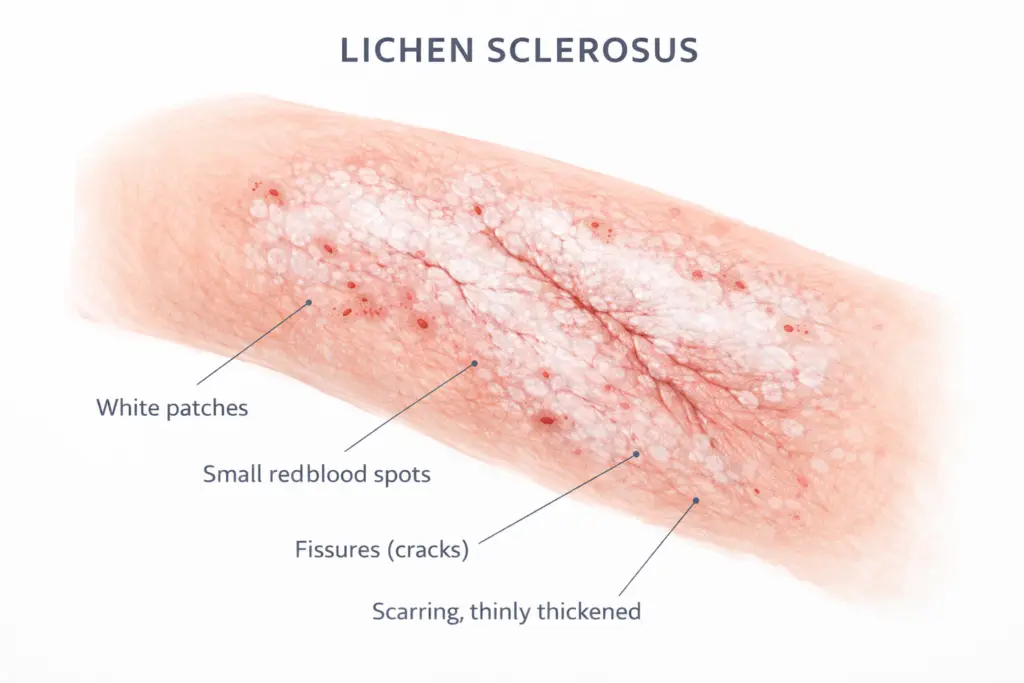
Lichen sclerosus is a chronic skin condition that causes thin, white, patchy skin – most commonly in the genital and anal areas. It can cause intense itching, pain, scarring, and significantly impact quality of life. For many patients, standard treatments provide only temporary relief.
At Innovations Stem Cell Center, we offer stem cell therapy to help regenerate damaged skin tissue and provide lasting relief from lichen sclerosus symptoms. Our adipose-derived stem cells yield 100 million cells per treatment – compared to just 100,000 from bone marrow. More cells means more healing potential.
What is Lichen Sclerosus?
Lichen sclerosus is a chronic inflammatory skin condition that causes the skin to become thin, white, and wrinkled. While it can occur anywhere on the body, it most commonly affects the vulva in women and the foreskin in men.
The condition affects approximately 1 in 300 to 1 in 1,000 people. It’s most common in:
– Postmenopausal women
– Prepubescent girls
– Uncircumcised men
The exact cause is unknown, but it’s believed to involve autoimmune factors, hormonal changes, and genetic predisposition.
Symptoms of Lichen Sclerosus
Common symptoms include:
– White, patchy skin that appears thinner than normal
– Intense itching (often the first symptom)
– Discomfort or pain, especially during intercourse
– Easy bruising and tearing of skin
– Painful urination (if affecting genital area)
– Bleeding from fragile skin
– Scarring that can cause tissue fusion
– Smooth, shiny skin appearance
– Wrinkled or crinkled texture (“cigarette paper” appearance)
Left untreated, lichen sclerosus can cause permanent scarring, narrowing of the vaginal opening, and in rare cases, increased risk of skin cancer in the affected area.
Why Standard Treatments Often Fall Short
Traditional treatments for lichen sclerosus include:
– High-potency topical corticosteroids (first-line treatment)
– Topical calcineurin inhibitors (tacrolimus, pimecrolimus)
– Topical retinoids
– Phototherapy (UV light treatment)
– Surgery to release scarring
– Hormone creams
The problem? These treatments manage symptoms but don’t regenerate the damaged tissue. Many patients require lifelong steroid use, which can cause skin thinning over time. Others experience only partial relief or frequent flare-ups.
How Stem Cells Help Lichen Sclerosus
Stem cell therapy takes a regenerative approach – working to repair and regenerate the damaged skin tissue rather than just suppressing symptoms.
When deployed for lichen sclerosus, stem cells:
– Reduce chronic inflammation at the cellular level
– Stimulate regeneration of healthy skin tissue
– Improve skin thickness and elasticity
– Release growth factors that promote healing
– May help reduce scarring
– Address the underlying tissue damage
This is why many patients see improvement that lasts – because stem cells work to heal the damaged tissue itself.
The Lichen Sclerosus Stem Cell Procedure
Our stem cell procedure is performed entirely in our Dallas office under local anesthesia.
Step 1: Consultation
We review your medical history, symptoms, and previous treatments to determine if you’re a good candidate.
Step 2: Stem Cell Harvest (3 minutes)
Using local anesthesia, we harvest about 50cc of fat (3 tablespoons) from your abdomen or flanks.
Step 3: Processing (2.5 hours)
Your fat is processed in our FDA-compliant lab to isolate stem cells. We verify an average yield of 100 million cells.
Step 4: Deployment
Stem cells are deployed via IV infusion to address systemic inflammation. For localized lichen sclerosus, cells may also be injected into affected tissue.
Total appointment time: approximately 3-4 hours. No general anesthesia. No hospital stay.
Who Is a Good Candidate?
You may be a good candidate for lichen sclerosus stem cell therapy if you:
– Have been diagnosed with lichen sclerosus
– Experience persistent symptoms despite topical treatments
– Want to reduce dependence on long-term steroid use
– Have scarring or tissue changes from the condition
– Are looking for a regenerative approach
– Are in overall good health
– Have no active cancer or infection
Cost of Stem Cell Therapy for Lichen Sclerosus
$12,500 for initial treatment
Your investment includes:
✅ Complete medical evaluation
✅ Stem cell harvest & processing (100 million cells)
✅ IV infusion + targeted delivery
✅ Follow-up care included
Second treatment (if needed): $5,000
Financing up to 60 months available.
Frequently Asked Questions
Q: Can stem cells help lichen sclerosus?
A: Yes. Stem cells work to regenerate damaged skin tissue and reduce chronic inflammation. Many patients see improvement in symptoms including itching, pain, and skin texture.
Q: How is this different from steroid creams?
A: Steroid creams suppress inflammation temporarily but don’t repair damaged tissue. Stem cell therapy works to regenerate healthy skin tissue, addressing the underlying damage rather than just managing symptoms.
Q: How long until I see results?
A: Many patients notice improvement within weeks as inflammation decreases. Tissue regeneration continues over several months as stem cells repair damaged skin.
Q: Will I still need steroid creams after stem cell therapy?
A: Many patients are able to reduce or eliminate their dependence on topical steroids after stem cell therapy. Results vary based on severity of the condition.
Q: Is the procedure painful?
A: Most patients report minimal discomfort. We use local anesthesia for the fat harvest. The IV infusion is painless.
Q: How many treatments will I need?
A: Many patients see significant improvement with one treatment. Some with more severe or long-standing cases may benefit from a second treatment.
Schedule Your Consultation
If you’re suffering from lichen sclerosus and standard treatments haven’t provided lasting relief, stem cell therapy may offer the solution you’ve been seeking.
Call (214) 643-8665 or schedule a consultation online.