
Stem Cell Therapy Patient Results: What Outcomes May Be Possible
What “Results” Mean in Regenerative Medicine
When patients ask about “results” from stem cell therapy, it’s important to understand that regenerative medicine works differently than medications or surgical procedures. Rather than masking symptoms or mechanically altering anatomy, regenerative therapies are designed to support the body’s natural repair and recovery processes.
Because every patient’s biology, condition severity, and overall health are different, results can vary significantly between individuals. Some patients experience noticeable changes quickly, while others see gradual improvement over time. Outcomes are influenced by many factors, including the type of condition treated, duration of symptoms, lifestyle factors, and adherence to post-treatment guidance.
In regenerative medicine, results are typically evaluated through improvements in daily function, comfort, mobility, activity tolerance, and quality of life rather than a single measurement or guaranteed outcome.
Stem cell therapy is not intended to provide instant cures or replace necessary medical care when surgery or other interventions are clinically appropriate. Instead, it offers a potential non-surgical pathway for patients seeking to support tissue health, reduce inflammation, and improve function when conservative treatments have not delivered satisfactory results.
Setting realistic expectations is a critical part of responsible care and long-term patient satisfaction.
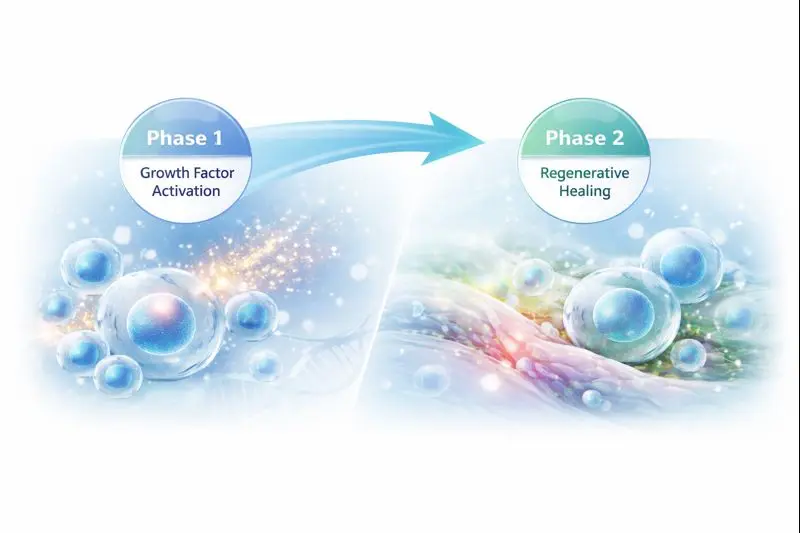
The Two-Phase Response: Early Growth Factor Effects vs Regenerative Healing
Many patients are surprised to learn that stem cell therapy often produces two distinct phases of response. Understanding the difference between early biological signaling effects and longer-term regenerative processes helps patients interpret changes accurately and set realistic expectations.
⚡ Phase One: Early Growth Factor Response (First 36 Hours to 2–3 Months)
Within the first 24–36 hours after treatment, many patients commonly report improvements such as reduced pain, decreased inflammation, and improved mobility or range of motion. This initial phase is often driven by growth factors and signaling molecules released during the regenerative process.
These biological signals may help calm inflammatory activity and support tissue environment stabilization, which can translate into noticeable symptom relief relatively quickly. For many patients, this early response lasts several weeks and may continue for up to two to three months.
It’s important to understand that this early improvement does not necessarily represent permanent tissue regeneration. Rather, it reflects biological signaling effects that may create a favorable environment for longer-term healing processes to occur.
🌱 Phase Two: Regenerative Healing Phase (Approximately 3–24 Months)
Around the three-month mark, some patients may begin noticing deeper functional changes that develop gradually over time. This second phase reflects the body’s natural repair processes progressing within treated tissues.
Improvements during this phase may include increased strength, improved stability, enhanced nerve function, better endurance, and more consistent daily performance depending on the condition treated. These changes typically build slowly and may continue evolving for up to 12–15 months before stabilizing.
Not every patient experiences the same degree or pace of change, and individual biology, condition severity, activity level, and overall health all influence outcomes.
🔄 Why Multiple Treatments Are Sometimes Recommended
Based on long-term clinical observation over more than a decade of patient care, many patients may benefit from more than one treatment depending on their diagnosis, severity, and response goals. Some conditions require staged treatment approaches to support sustained biological signaling and longer-term recovery processes.
Treatment recommendations are always individualized and determined during a medical evaluation.
🧭 Understanding Both Phases Builds Confidence
Recognizing that early symptom relief and longer-term regenerative changes represent different biological processes helps patients avoid confusion or unrealistic expectations. Both phases contribute to the overall treatment experience and outcome trajectory.

Typical Improvement Timeline
While individual responses vary, many patients follow a general pattern of change after stem cell therapy. Understanding this typical timeline helps patients recognize what is normal and avoid misinterpreting early or delayed changes.
⏱️ First 24–36 Hours
Some patients notice early improvements in comfort, reduced inflammation, and improved movement within the first one to two days following treatment. This phase is commonly associated with early biological signaling and growth factor activity.
Not every patient experiences noticeable change this quickly, and absence of early response does not mean treatment was ineffective.
📅 Weeks 1–12 (Early Stabilization Phase)
During the first several weeks, early symptom relief may continue for many patients. Inflammation levels may remain reduced, mobility may feel improved, and daily activities may become more comfortable.
This period reflects biological signaling effects rather than permanent structural change.
🌱 Months 3–12+ (Regenerative Phase)
Around the three-month mark, some patients may begin noticing deeper functional improvements that develop gradually. These may include improved strength, endurance, stability, nerve function, and consistency of symptom relief depending on the condition treated.
These changes often continue evolving over many months.
📈 Months 12–15 (Plateau Phase)
For many patients, measurable improvements stabilize between approximately 12 to 15 months. At this point, results tend to level off and long-term maintenance planning may be discussed if appropriate.
🔁 Multiple Treatment Considerations
Based on long-term clinical experience, many patients benefit from more than one treatment depending on their diagnosis and response goals. Treatment frequency and spacing are determined individually through medical evaluation.
⚠️ Important Timeline Reminder
Individual biology, severity of condition, lifestyle factors, and adherence to post-treatment guidance all influence response timelines. Some patients progress faster or slower than average.
Types of Outcomes Patients May Experience
Patients pursue stem cell therapy for a variety of reasons, and outcomes may differ based on individual goals, diagnosis, and biological response. Rather than focusing on a single metric, regenerative therapy outcomes are typically evaluated across multiple functional and quality-of-life domains.
Below are some of the most common types of improvements patients may experience over time.
🤕 Reduced Pain and Discomfort
Many patients report decreased pain levels as inflammation and tissue environment stabilize. This may allow for improved comfort during daily activities, exercise, and sleep.
🔥 Reduced Inflammation and Swelling
Inflammatory activity often plays a major role in chronic pain and limited function. Some patients experience reductions in swelling, stiffness, and inflammatory flare-ups following treatment.
🚶 Improved Mobility and Range of Motion
Patients may notice improved joint movement, flexibility, and overall mobility as tissues become more tolerant of activity and stress.
⚖️ Improved Functional Performance
Functional gains may include better walking tolerance, improved balance, greater lifting capacity, enhanced endurance, or improved fine motor control depending on the condition treated.
🧠 Nerve-Related Sensory and Functional Changes
For patients with nerve-related conditions, some individuals report changes in sensation, reduced tingling or numbness, and improved coordination over time. Response patterns vary based on nerve integrity and underlying causes.
💊 Reduced Reliance on Symptom Management Strategies
Some patients are able to reduce dependence on pain medications, injections, or supportive devices as function improves. This varies by individual and should always be coordinated with medical guidance.
🧘 Improved Quality of Life
As physical comfort and function improve, patients may experience greater independence, confidence, activity participation, and overall well-being.
⚠️ Outcomes Vary Between Individuals
Not all patients experience the same degree or type of improvement. Results depend on many factors including health status, severity of condition, treatment adherence, and biological variability.

Which Conditions Tend to Respond Best
While individual responses vary, long-term clinical observation and published regenerative medicine trends suggest that some categories of conditions tend to respond more consistently than others. Response strength is influenced by tissue type, degree of degeneration, vascular supply, inflammation burden, and overall biological environment.
Based on years of patient care experience, the following condition categories often demonstrate more predictable improvement patterns.
🥇 Shoulder Injuries and Degenerative Shoulder Conditions
Shoulder-related conditions often respond particularly well to regenerative therapies due to favorable vascular supply, mechanical accessibility, and localized tissue environment. Patients with rotator cuff irritation, tendon strain, joint degeneration, and overuse injuries frequently seek regenerative care when conservative treatments no longer provide sufficient relief.
🛡️ Inflammatory and Autoimmune-Related Conditions
Certain inflammatory and autoimmune-driven conditions may demonstrate favorable responses when inflammation contributes significantly to symptom burden. Outcomes vary depending on disease activity, immune stability, and overall health.
🦵 Arthritis and Degenerative Joint Conditions
Patients with joint degeneration and arthritis often pursue regenerative therapy to support joint comfort, mobility, and functional performance when surgical options are not immediately desirable.
🫁 Lung-Related Conditions and Respiratory Function Support
Some patients explore regenerative therapy for respiratory-related concerns under medical guidance when appropriate. Response patterns vary based on underlying pathology and overall pulmonary health.
🤕 Pain Syndromes and Chronic Discomfort
Chronic pain conditions driven by inflammation or tissue stress may respond favorably when biological signaling helps stabilize the tissue environment.
⚠️ Individual Evaluation Always Matters
Even within responsive categories, individual outcomes vary significantly. A consultation helps determine medical appropriateness and realistic expectations based on personal health factors.
Why Results Vary Between Patients
No two patients respond to stem cell therapy in exactly the same way. Even when individuals share a similar diagnosis, differences in biology, health history, and lifestyle factors can significantly influence outcomes.
Understanding why results vary helps patients maintain realistic expectations and make informed decisions.
🧬 Severity and Duration of the Condition
Long-standing conditions, advanced degeneration, or extensive tissue damage may respond differently than early-stage or moderate conditions. Chronic tissue changes may require longer timelines or multiple treatments to achieve meaningful improvement.
🏃 Overall Health and Lifestyle Factors
Nutrition, hydration, sleep quality, physical activity, body weight, smoking status, and stress levels all influence the body’s ability to support healing processes.
📅 Age and Biological Variability
Biological age and individual cellular response capacity vary widely between patients and influence recovery patterns.
🧠 Underlying Medical Conditions
Systemic health conditions such as metabolic disorders, autoimmune activity, or vascular issues may impact response consistency.
🧪 Treatment Protocol and Adherence
Following post-treatment guidance, activity recommendations, and follow-up planning supports optimal outcomes.
🧭 Realistic Goal Alignment
Patients who align expectations with biological realities often report higher satisfaction and better long-term engagement.
⚠️ Comparing Results Can Be Misleading
Online testimonials, anecdotal stories, and generalized claims may not reflect individual outcomes. Personalized medical evaluation remains essential.
What Stem Cell Therapy Cannot Do
While stem cell therapy may offer meaningful benefits for many patients, it is important to understand its limitations. Regenerative medicine is not a cure-all and should not be viewed as a replacement for appropriate medical care when surgery or other interventions are clinically necessary.
Clear understanding of what stem cell therapy cannot do helps patients make informed decisions and maintain realistic expectations.
🚫 It Does Not Guarantee Results
Biological response varies between individuals. Some patients experience noticeable improvement, while others may experience modest or minimal change. Outcomes cannot be guaranteed.
🚫 It Does Not Reverse Severe Structural Damage
Advanced joint collapse, severe nerve destruction, major spinal instability, or irreversible tissue loss may not respond predictably to regenerative therapy. In these cases, surgical or alternative medical options may be more appropriate.
🚫 It Is Not an Instant Cure
While some patients notice early symptom changes due to biological signaling effects, true regenerative processes take time. Long-term improvement typically develops over months rather than days or weeks.
🚫 It Does Not Eliminate the Need for Healthy Habits
Lifestyle factors such as nutrition, activity, weight management, and rehabilitation play an important role in outcomes. Stem cell therapy supports healing processes but does not replace healthy behaviors or medical guidance.
🚫 It Cannot Predictably Treat Every Rare or Complex Condition
Some rare medical conditions have limited patient data or published research available. While regenerative therapy may be explored in certain cases, outcomes may be less predictable and should be approached cautiously.
🚫 It Is Not a Substitute for Emergency or Critical Care
Stem cell therapy is not designed for emergency treatment, acute trauma management, or life-threatening medical conditions.
⚖️ Responsible Care Requires Honest Boundaries
Establishing clear limitations protects patient safety, supports ethical care, and helps patients make confident decisions aligned with medical reality.
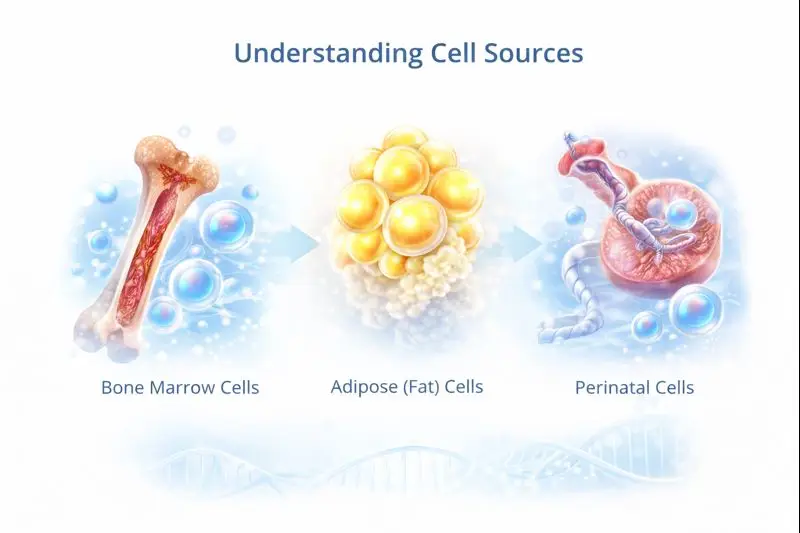
Understanding Cell Sources: Adipose vs Bone Marrow vs Cord Blood
Not all stem cell treatments are the same. One of the most important — and often misunderstood — factors influencing regenerative therapy is the source of the cells used for treatment. Patients frequently encounter confusing or misleading marketing claims when comparing adipose-derived cells, bone marrow-derived cells, and cord blood products.
Understanding these differences helps patients make informed decisions based on biological realities rather than advertising language.
🟡 Adipose-Derived Cells (Patient’s Own Fat Tissue)
Adipose tissue is naturally rich in regenerative cells and growth factors. When a patient’s own fat tissue is used, a substantially larger quantity of regenerative cells may be available compared to other sources. Higher cell quantity may provide a more robust biological signaling environment.
Because the cells originate from the patient’s own body, compatibility concerns are minimized. Adipose-derived treatments are commonly used in regenerative medicine due to their availability and cellular density.
🔴 Bone Marrow-Derived Cells
Bone marrow also contains regenerative cells but typically in lower concentration compared to adipose tissue. Collection methods may be more invasive and yield smaller cell quantities depending on technique and patient factors.
Some patients prefer bone marrow due to familiarity or historical use, but cell quantity differences are an important consideration when evaluating potential biological impact.
🔵 Cord Blood Products
Cord blood products are often marketed as containing “younger” cells. While cellular age may have theoretical value, actual biological impact depends heavily on total cell quantity and viability.
Many commercially available cord blood products are packaged in relatively small cell doses. In some cases, patients may receive only one or two small vials, which may limit total cell exposure unless doses are expanded through laboratory processing.
Patients comparing pricing should be aware that lower-cost stem cell quotes may reflect smaller packaged cell quantities rather than equivalent biological capacity.
⚖️ Why Cell Quantity Matters More Than Marketing Claims
Biological signaling strength is influenced by total viable cell quantity and growth factor availability rather than age claims alone. Understanding this distinction helps patients evaluate treatment options more accurately.
The type of stem cell used varies greatly with usable cell quantity. A conservative estimate for many fat based options is 30 million or more. Whereas, with Bone Marrow stem cell options, a “very good” cell quality is only 20,000 cells.
🔍 Ask Questions During Your Consultation
Patients are encouraged to ask their provider:
What cell source is used
Estimated cell quantity ranges
How cells are processed and handled
Whether doses are expanded or concentrated
Safety protocols involved
Transparent education supports informed decision-making.
⚠️ Important Note
Treatment appropriateness depends on individual medical evaluation. Cell source selection is guided by safety, medical judgment, and patient-specific considerations.
How Progress Is Evaluated Over Time
Evaluating progress after stem cell therapy involves more than simply asking whether pain has changed. Because regenerative processes evolve gradually, providers assess multiple indicators over time to understand how the body is responding and whether additional guidance or treatment may be appropriate.
📋 Symptom Tracking and Functional Feedback
Patients are encouraged to monitor changes in comfort levels, mobility, endurance, stability, and daily activity performance. Subtle improvements often accumulate over time and may not be immediately obvious without consistent tracking.
🏃 Activity Tolerance and Performance Changes
Improvements in walking distance, exercise tolerance, work capacity, balance, and movement quality provide valuable insight into functional recovery trends.
🧠 Sensory and Neurological Observations
For nerve-related conditions, changes in sensation, coordination, strength, or balance may indicate evolving neurological response patterns.
🩺 Follow-Up Communication and Check-Ins
Periodic follow-up allows the care team to address questions, provide guidance, and assess progress patterns. Adjustments to activity levels, rehabilitation strategies, or supportive care may be recommended as needed.
📈 Longitudinal Perspective Matters
Progress is often gradual rather than linear. Short-term fluctuations are normal, and meaningful improvement may become more apparent over several months.
🔁 Ongoing Evaluation Supports Better Decision-Making
Monitoring response over time helps guide future treatment planning when appropriate and supports informed expectations.
Realistic Expectations and Long-Term Planning
Approaching stem cell therapy with realistic expectations and thoughtful long-term planning helps patients achieve the best possible experience and satisfaction. Regenerative medicine is a process rather than a single event, and outcomes often evolve gradually over time.
🎯 Set Goals Based on Function, Not Perfection
Rather than expecting complete symptom elimination, many patients focus on meaningful improvements in daily comfort, mobility, activity participation, and quality of life. Small functional gains often compound into significant lifestyle improvements.
⏳ Allow Time for Biological Processes
True regenerative changes typically develop over months rather than days. Patience and consistency support better interpretation of progress and reduce unnecessary anxiety.
🔁 Plan for Possible Follow-Up Treatments
Based on long-term clinical observation, some patients benefit from additional treatments depending on their condition severity, goals, and response patterns. Follow-up planning helps maintain progress and maximize long-term benefit.
🧘 Lifestyle Support Matters
Nutrition, hydration, sleep quality, physical activity, weight management, and stress reduction all influence healing capacity. Optimizing these factors supports better outcomes.
🤝 Open Communication Supports Better Outcomes
Maintaining open communication with your care team allows questions, concerns, and progress observations to be addressed proactively.
📍 Next Steps
If you are considering stem cell therapy, the next step is determining medical eligibility and developing a personalized treatment plan through a consultation.

Frequently Asked Questions About Stem Cell Therapy Results
Q: How soon will I notice results after stem cell therapy?
A: Some patients notice early changes within the first 24–36 hours, often related to growth factor signaling that may temporarily reduce inflammation and discomfort. Longer-term regenerative changes typically develop gradually over several months.
Q: What is the difference between early improvement and true regeneration?
A: Early improvement is often driven by biological signaling effects that may calm inflammation and improve comfort temporarily. Regenerative healing reflects deeper biological repair processes that develop more slowly over time.
Q: How long do results usually last?
A: Many patients experience continued improvement over 12–15 months before results stabilize. Individual response varies based on condition severity, health factors, and treatment planning.
Q: Will I need more than one treatment?
A: Some patients benefit from multiple treatments depending on diagnosis, severity, and response goals. Treatment frequency is determined individually through medical evaluation.
Q: Which conditions tend to respond best?
A: Based on long-term clinical observation and published regenerative medicine trends, shoulder injuries, inflammatory conditions, arthritis, certain lung-related conditions, and pain syndromes often demonstrate more consistent response patterns. Individual outcomes vary.
Q: Are results guaranteed?
A: No. Biological response varies between individuals, and outcomes cannot be guaranteed. A consultation helps establish realistic expectations.
Q: Can stem cell therapy reverse severe damage?
A: Advanced structural damage, severe nerve destruction, or irreversible tissue loss may not respond predictably to regenerative therapy. In such cases, alternative treatments may be more appropriate.
Q: How are results measured over time?
A: Progress is evaluated through symptom tracking, functional performance changes, activity tolerance, and follow-up communication rather than a single measurement.
Q: Does cell source affect results?
A: Cell source can influence biological signaling and total cell quantity. Adipose-derived cells often provide higher cell quantities compared to bone marrow or cord blood products. Treatment selection depends on medical judgment and individual evaluation.
Q: How do I know if I’m a good candidate?
A: Eligibility is determined through a medical consultation reviewing your condition, medical history, and treatment goals.
Q: Where can I see patient experiences?
A: You may explore patient stories and testimonials to understand real-world experiences. Individual results vary.
Q: What is the next step if I’m interested?
A: The next step is scheduling a consultation to determine eligibility and develop a personalized treatment plan.