
Best Stem Cell
Clinic in
the USA
Torn ligaments and damaged tendons don’t have to mean surgery. Stem cell therapy helps your body repair ACL tears, rotator cuff injuries, achilles tendonitis, and other connective tissue damage naturally.
Results in days. Return to activity in weeks.
🏆 Best Stem Cell Clinic in the USA – Life Sciences Review Magazine
Tendons and ligaments are both connective tissues, but they serve different functions:
Tendons connect muscle to bone and enable movement. When damaged, you lose strength and mobility.
Ligaments connect bone to bone and stabilize joints. When torn, joints become unstable and painful.
Both heal slowly due to limited blood flow. Traditional treatments—rest, physical therapy, or surgery—often fail to fully restore function. Stem cell therapy accelerates healing by regenerating damaged tissue at the cellular level.
The ACL stabilizes your knee during pivoting and cutting movements. ACL tears are common in athletes and often require surgery. Stem cell therapy can repair partial tears and strengthen weakened ligaments, helping you avoid or delay surgery.
MCL tears cause knee instability and pain on the inner knee. Stem cells accelerate healing of torn MCL fibers and reduce recovery time from months to weeks.
PCL injuries occur from direct impact to the knee. Stem cells help repair the damaged ligament and restore knee stability without surgery.
Chronic ankle instability from repeated sprains weakens ligaments over time. Stem cell therapy strengthens damaged ankle ligaments and prevents future injuries.
– Shoulder ligament tears (labral tears)
– Wrist ligament injuries (TFCC tears)
– Hip ligament damage
– Thumb ligament tears (skier’s thumb)
The Achilles tendon connects your calf to your heel and is the body’s strongest tendon. Achilles injuries sideline athletes and active adults for months. Stem cells repair torn Achilles fibers and reduce inflammation.
Why Achilles injuries heal slowly: Limited blood flow means healing nutrients struggle to reach the injury site. Stem cells deliver concentrated healing factors directly to the damaged tissue.
Rotator cuff tendons stabilize your shoulder during overhead movements. Partial tears cause pain, weakness, and limited range of motion. Stem cells repair torn rotator cuff fibers without surgery.
Patellar tendonitis causes pain below the kneecap from overuse. Athletes in jumping sports (basketball, volleyball) commonly develop this condition. Stem cells reduce inflammation and repair tendon damage.
Tennis elbow is tendonitis of the elbow tendons from repetitive gripping and wrist movements. Stem cells heal chronic elbow tendon damage when rest and physical therapy fail.
– Biceps tendonitis
– Hip flexor tendonitis
– Plantar fasciitis (foot tendon)
– De Quervain’s tenosynovitis (thumb/wrist)
Ligament and tendon injuries heal slowly because:
1. Limited blood flow to connective tissue
2. Slow cell reproduction in tendons/ligaments
3. Scar tissue forms instead of healthy tissue
Stem cells solve all three problems:
1. Harvest
Stem cells are extracted from your own fat tissue using gentle liposuction (30 minutes).
2. Concentrate
Cells are processed to create Stromal Vascular Fraction (SVF)—highly concentrated stem cells and growth factors (90 minutes).
3. Deploy
Stem cells are injected directly into the torn ligament or damaged tendon. For systemic inflammation, IV deployment is also used.
4. Regenerate
Stem cells immediately begin repairing damaged tissue:
– Reduce inflammation (pain relief in 1-2 days)
– Generate new tendon/ligament fibers
– Improve blood flow to injury site
– Prevent scar tissue formation
Fat-derived stem cells and connective tissue both originate from mesenchymal stem cells. This makes them naturally compatible for tendon and ligament repair.
Adipose stem cells are superior to PRP (Platelet Rich Plasma) for chronic tendon/ligament injuries because they contain anti-inflammatory growth factors, while PRP can cause inflammation.
✓ Partial ligament tears (avoid surgery)
✓ Chronic ligament instability (repeated sprains)
✓ Failed conservative treatment (rest, PT didn’t work)
✓ Want to avoid surgery (or delay ligament reconstruction)
✓ Athletes needing faster recovery (return to sport quicker)
Immediately after treatment:
– Inflammation reduction begins (1-2 days)
– Pain decreases noticeably
Weeks 2-4:
– Range of motion improves
– Stability returns to joint
– Light activity can resume
Months 2-3:
– Continued tissue regeneration
– Strength returns
– Return to full activity
Long-term:
– Ligament tissue quality improves
– Reduced re-injury risk
– Many patients avoid surgery entirely
For partial ACL tears or chronic ACL laxity, stem cells can strengthen the ligament and restore knee stability. Full ACL ruptures may still require surgery, but stem cells can be used post-surgery to accelerate healing.
Chronic tendonitis persists because:
– Inflammation never fully resolves
– Micro-tears accumulate over time
– Blood flow remains limited
– Scar tissue replaces healthy tendon
Rest alone doesn’t fix these problems. Stem cells do.
Conditions we treat:
– Achilles tendonitis (runners, athletes)
– Rotator cuff tendonitis (overhead athletes, aging)
– Patellar tendonitis (jumpers, cyclists)
– Tennis elbow (repetitive gripping)
– Golfer’s elbow (throwing, swinging)
1. Anti-inflammatory effect (reduces pain immediately)
2. Repair micro-tears (strengthens tendon structure)
3. Improve blood flow (delivers healing nutrients)
4. Regenerate healthy tissue (replaces scar tissue)
Results: Most patients see inflammation reduction in 1-2 days. Full tendon healing occurs over 3-6 months as tissue regenerates.
Tendonitis = acute inflammation (recent injury)
Tendinosis = chronic degeneration (months/years old)
Stem cells treat both. For chronic tendinosis, stem cells reverse degenerative changes and restore tendon quality.
✓ Athletes with torn ligaments or chronic tendonitis
✓ Active adults wanting to avoid surgery
✓ Weekend warriors with overuse injuries
✓ Patients who failed physical therapy or injections
✓ Anyone wanting faster recovery than surgery offers
ACL tear (partial): Stem cells repair tear, avoid reconstruction surgery
Chronic Achilles tendonitis: 6+ months unresponsive to rest—stem cells finally heal it
Rotator cuff partial tear: Avoid shoulder surgery, return to overhead activities
Tennis elbow that won’t heal: Months of PT failed—stem cells repair tendon damage
Patellar tendonitis: Jumper’s knee sidelined you—stem cells get you back to sport
Any ligament or tendon injury not healing after 6+ weeks of conservative treatment
1-2 days after treatment:
– Noticeable reduction in pain
– Inflammation decreases
– Joint feels more stable (ligament injuries)
1-2 weeks:
– Increased range of motion
– Return to light activity
– Continued pain reduction
1-3 months:
– Anti-inflammatory effects peak
– Significant functional improvement
– Return to moderate activity
3-6 months:
– Tissue regeneration continues
– Strength fully returns
– Return to full activity/sport
Most patients need only one treatment. Some severe or chronic injuries benefit from a second treatment ($10,000) at 6-12 months.
Results are not temporary. Stem cells regenerate actual tissue—the improvement is structural and lasting.
Clinical studies show stem cell therapy for tendon and ligament injuries:
– Reduces pain in 85%+ of patients
– Improves function significantly
– Helps many patients avoid surgery
– Accelerates healing compared to rest alone
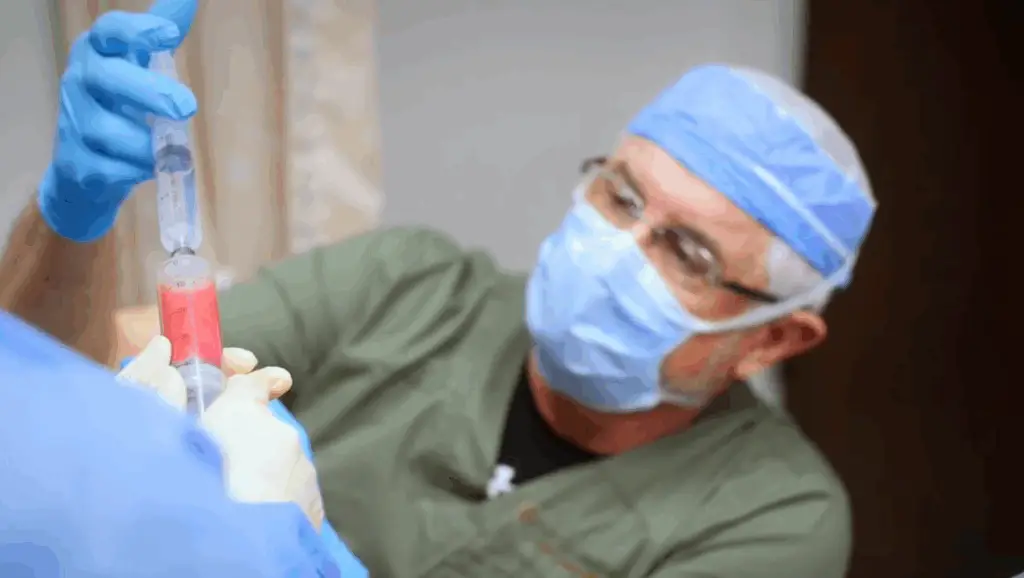
Actual Innovations Stem Cell Center patient that came in for ankle problems. See why patients choose Innovations Stem Cell Center for stem cell therapy for tendon and ligament issues.
🏆 Best Stem Cell Clinic in the USA
Life Sciences Review Magazine
✓ Physician since 1983
✓ 6,000+ stem cell procedures performed
✓ Same-day outpatient treatment (home in 4 hours)
✓ Local anesthesia only (no general anesthesia risks)
✓ Adipose-derived stem cells (superior to PRP for chronic injuries)
✓ Proven protocols refined over nearly two decades
Experience: Dr. Bill Johnson has treated thousands of ligament and tendon injuries with stem cell therapy since 2005.
Technology: We use SVF (Stromal Vascular Fraction) therapy—the most advanced adipose stem cell protocol available.
Results: Patients see inflammation reduction in 1-2 days, with continued improvement over months as tissue regenerates.
Safety: Using your own stem cells eliminates rejection risk. Local anesthesia avoids general anesthesia complications.
Initial treatment: $16,500
Follow-up treatments (if needed): $10,000
– Stem cell harvesting from your own fat tissue
– Cell processing and concentration (SVF preparation)
– Injection into injured tendon or ligament
– IV deployment (if needed for systemic inflammation)
– Same-day outpatient procedure
– Local anesthesia only
Financing is available. Contact us directly and we’ll help you apply.
Most patients need only one treatment. Some chronic or severe injuries may benefit from a second treatment 6-12 months later.
Schedule Free Consultation | Apply for Financing | (972) 893-9849
Yes. Stem cells regenerate damaged ligament tissue and strengthen torn ligament fibers. For partial ACL, MCL, or ankle ligament tears, stem cells can repair the tear and restore joint stability, helping many patients avoid surgery.
Most patients notice inflammation reduction within 1-2 days. Functional improvement occurs over 2-4 weeks. Full ligament healing takes 3-6 months as tissue regenerates. This is faster than surgery recovery (4-9 months) and more complete than rest alone.
Yes. Stem cells are especially effective for chronic tendonitis (achilles, rotator cuff, tennis elbow) that has lasted months or years. The anti-inflammatory properties reduce pain quickly while stem cells repair accumulated micro-tears over 3-6 months.
Yes. Stem cells repair torn Achilles tendon fibers and improve blood flow to the injury site. For partial Achilles tears, stem cells can help avoid surgery. For complete ruptures, stem cells can be used after surgical repair to accelerate healing.
For chronic tendon injuries (present for weeks or months), stem cells are superior to PRP. Stem cells contain anti-inflammatory growth factors, while PRP can cause inflammation. Adipose stem cells also regenerate tissue, not just reduce inflammation.
Stem cells are injected directly into the damaged tendon or ligament using ultrasound guidance for precision. The procedure takes minutes and uses local anesthesia. For systemic inflammation, IV deployment is also used.
Most patients need only one treatment. Some severe or chronic injuries (like advanced rotator cuff tears or chronic Achilles tendonitis) benefit from a second treatment ($10,000) at 6-12 months. Your response to the initial treatment determines if additional sessions help.
Many patients use stem cells to avoid or delay ACL reconstruction, rotator cuff surgery, or ankle ligament repair. Stem cells give damaged tissue a chance to heal properly before considering surgery. For partial tears, stem cells often eliminate the need for surgery entirely.
Tendonitis is inflammation of a tendon (connects muscle to bone). Ligament tears are injuries to ligaments (connect bone to bone). Both involve connective tissue. Stem cells treat both by reducing inflammation and regenerating damaged tissue.
Most athletes return to light training in 2-4 weeks and competition in 8-16 weeks. This is significantly faster than surgery (4-9 months). Recovery depends on injury severity and sport demands. We provide personalized return-to-sport timelines.
Stem cell therapy also treats:
– Sports Injuries (comprehensive coverage)
– Knee Pain (ACL, MCL, meniscus, arthritis)
– Shoulder Pain (rotator cuff, labral tears)
– Hip Pain (labral tears, bursitis)
– Back Pain (disc injuries, spinal conditions)
– Muscle Injuries (strains, tears)
– Arthritis (joint degeneration)
Stop letting a torn ligament or chronic tendonitis keep you on the sidelines.
Why wait months for surgery when stem cells can heal your injury naturally?
✓ Same-day outpatient procedure
✓ Results in days, not months
✓ Avoid surgery and lengthy recovery
✓ Proven results since late 2012
🏆 Best Stem Cell Clinic in the USA
Life Sciences Review Magazine
Schedule Free Consultation | Call (972) 893-9849
Dallas Location:
12660 Coit Rd
Dallas, TX 75251
Serving athletes and active adults nationwide.